Continuing education can be a valuable investment if you are looking to strengthen your skills to stay competitive, change careers, or prepare for new opportunities within your existing organization.
We talked to a few executive leaders across sectors to find out why continuing education is so important for career mobility and longevity.
Meet Our Experts

Cheri Hurtubise
Global Director of Talent Acquisition for Early Careers, Hasbro

Jonathan Levene
Senior Director of Organizational Development, Boston Children’s Hospital

Soundararajan (Soundar) Srinivasan
Senior Director, AI Innovation and Agentic Automation for Responsible AI Products, Microsoft
Why Employers Value Continuing Education
Employers view continuing education as a signal of initiative and commitment to growth. It comes in many forms, from graduate and microcertificates to advanced degrees — and all demonstrate to employers your willingness to keep learning and growing professionally.
Cheri Hurtubise, global director of talent acquisition for early careers at Hasbro, says there are a few reasons why professionals may choose to return to the classroom to advance their careers. Perhaps they want to gain deep technical skills in a niche area. Or, maybe someone wants to become a more agile generalist who can lead across different functions. “Both are extremely valuable, and both have a different mix of competencies,” she says.
Continuing education also benefits employers. Many organizations invest in their employees through internal training and development programs, while others offer tuition benefits that encourage employees to seek additional credentials or advanced degrees. Initiatives like this are shown to boost retention and engagement. For example, a 2024 survey published in Harvard Business Review shows that 88 percent of employers surveyed say they see an uptick in engagement, and 81 percent report positive performance outcomes.
Hurtubise says most employers are unlikely to be excited to make a hire they know will only stay for a year or less.
“There’s a stickiness to continuing education that a lot of companies value. We want someone who’s going to grow with us, evolve with us. And you’re coming with that drive. You already know why you’re studying this, why you’re coming back to school,” she says. “So that grit shows itself.”
Employees at all levels must keep up with advancing technology and evolving industry best practices — the jobs many of us were trained to do are evolving before our eyes.
How Continuing Ed Makes You a Competitive Candidate in the Job Market
Continuing education helps candidates build current skills, while demonstrating adaptability and agility. Job descriptions today are calling for a host of technical skills – and experience with leadership challenges – that just didn’t exist 10 or even five years ago. Expertise in emerging areas like AI can stand out on a resume. And that doesn’t mean the employee needs the hard skills themselves – but they can benefit from knowing how to lead those doing the work or understanding the ways AI is helping make business decisions.
For this reason, a growing number of professionals are considering upskilling. A 2024 report from Randstad reveals that 72 percent of employees want to future-proof their careers through specialized training.
Jyoti Vasudev, ALM ’26, was working as a software engineer at Microsoft when she first enrolled at Harvard Extension School. She says earning her master’s degree in data science not only gave her deeper technical skill but also boosted her credibility.

Choosing to pursue a graduate degree as a working adult with years of experience is taken seriously. It signals that you’re not coasting.
Now an AI engineer at Microsoft, she says the work she’s doing today is directly related to what she learned at HES. The curriculum allowed her to build on her professional experience and gain the expertise needed to advance to her new role.
Vasudev’s experience is just one example of how additional credentials can lead to new opportunities, often in emerging fields that didn’t exist the first time they went to school.
How Balancing Work and School Shapes How Employers See You
Our leaders break down a few specific traits they see in students continuing their education while working full time.
Passion and tenacity
Soundararajan (Soundar) Srinivasan, a senior director of AI innovation and agentic automation for responsible AI at Microsoft, admires the tenacity of continuing education students – but even more so, the passion for learning. He recalls seeing both his wife and brother-in-law juggle school and work.
“What really stuck with me was how passionate they were about what they were studying,” says Srinivasan. So for all continuing education students, passion is what helps them go the extra mile.
“It’s not just about doing the same amount of work. It is more work, but it doesn’t feel like work to them because they are pursuing something that they are absolutely passionate about,” he adds. “That passion translates into success for them in that particular moment in their education, but also translates that success for them in other aspects of their life.”
There’s a stickiness to continuing education that a lot of companies value.
Cheri Hurtubise
Decision-making and prioritization
Hurtubise was a continuing education student herself. And a trait that stands out for her is the decision-making ability that comes with the juggling Srinivasan describes. “It’s ruthless reprioritization over and over that you learn by doing,” she says.
Hurtubise adds that learning to make those trade-offs as a student directly translates to professional life. “Whether you’re going into a leadership position or you’re working as an individual contributor, you have multiple priorities pulling you the same way,” she explains. “You’re going to have to make a tough call at some point, and [continuing education students are] already naturally baked into doing that.”
The traits continuing education students bring to an organization do not go unnoticed; passion, persistence, and problem-solving continue to stand out.
Real-world learning and application
Jonathan Levene, senior director of organizational development at Boston Children’s Hospital, says the interchange between what students learn in class and what they’re doing at work is one of the greatest benefits of continuing education.
“What really sets you apart when you’re a working student is that you have the ability to apply what you learn in conversation, and that’s something nobody else can do,” he says. “That gives you an opportunity to develop stories about what you’ve learned, how you’ve applied it, the relationships you’ve developed, the outcomes you’ve achieved. I think that’s just as important as the actual thing that you’re learning.”
More than 80 percent of current Harvard Extension School students work full time, and they come into continuing education programs with an average of 12 years of professional experience. Taking courses — whether for a certificate or a master’s degree — while currently employed can have an immediate impact.
Janell Saville, ALM ’25, found this to be true. She’d been in project management for 25 years before enrolling in the Industrial-Organizational Psychology Master’s Degree Program. During the program, she shared her academic journey with her manager and was given projects that aligned with her coursework.
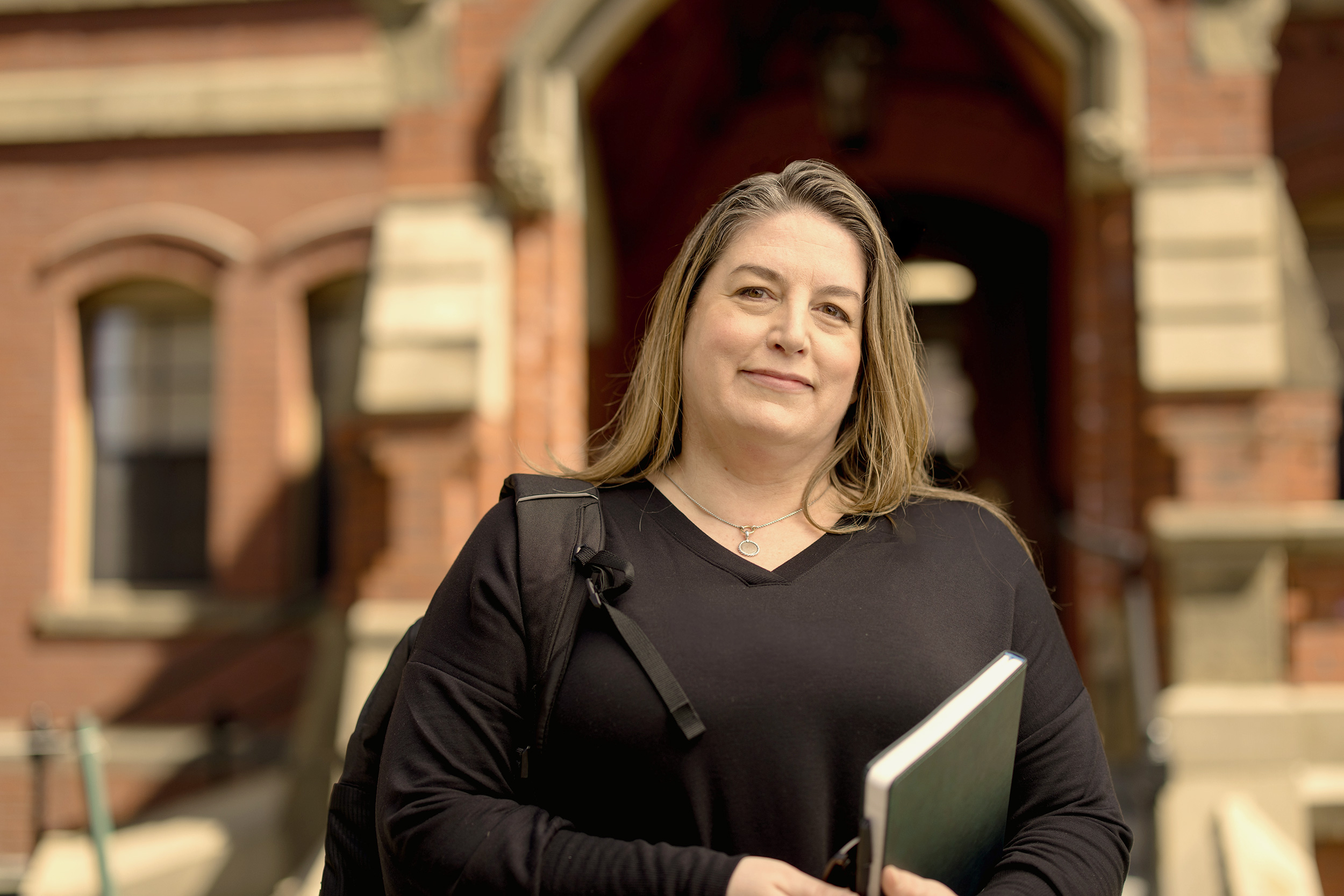
At Harvard, it wasn’t just about what I was learning but about how I could apply what I was learning to real-world situations.
“I created an employee engagement program for my organization’s business unit, did a career planning workshop, and participated in a six-month rotation on the global talent and culture team,” says Saville, who now works as an executive coach and consultant.
Saville’s experience aligns with so many others whose continuing education experience pays off even before completion.
Advice for Continuing Education Students from Employers
Our panel of experts offers a few words of wisdom for potential or current continuing education students.
Have confidence in yourself
Hurtubise says it can be easy for a returning student, especially one making a career pivot, to think they’re not as good as the rest of the market. “I’m going to ask you to take that thought right out of your head,” she says. “Because most folks in business and industry have had several careers.” She encourages anyone to develop their own narrative and be ready to answer this question: “Why should I hire you?”
Consider your entire story
For Levene, professional development is more about “leveraging rather than letting go” of existing education and experience. Currently in his fourth career, he encourages continuing education students to find commonality between what they’ve done and where they want to go.
“What I’ve found is I’ve initially started these transitions expecting to make 90-degree turns, and I wasn’t able to do that. The way I was able to do it was with 15-degree turns,” he says. “Work through that commonality by doing a little bit of research on career paths … look for adjacencies and see how you can use what you’ve developed going forward rather than abandoning it, and make a change.”
What really sets you apart when you’re a working student is you have the ability to apply what you learn in conversation, and that’s something nobody else can do.
Jonathan Levene
Capitalize on your strengths
Similar to Levene’s advice, Srinivasan recommends leveraging what you’re already good at. He says so much messaging about career and personal growth is about covering “weak spots” and making plans for how to get better.
“But I don’t think we talk a lot about leveraging your strengths. So when you are going back into education or reskilling, you want to ask: ‘What are the extra superpowers I can acquire through this effort?’ as opposed to, ‘OK, I’m not good at this thing.’”
Srinivasan adds that another helpful way to frame the question about what to do next is to ask: “Why can’t I already do that now? What are the additional skills that I need to acquire?” Then, he continues, once you know the skill and knowledge gaps you need to fill, you can ask yourself: “What is the best place to acquire them from?”
How Continuing Ed Improves Your Career Long Term
While continuing education may lead to an immediate pivot, promotion, or specialized lateral move, the new skills and knowledge, the boosted confidence, the expanded network, and the commitment to continuous improvement have ripple effects.
“You’re learning how to prioritize and reprioritize all the time. Guess what we do in business? Exactly that,” says Hurtubise.
Harvard Extension School career outcomes & resources
Promotions. Greater responsibility. Specialized roles. Raises. Continuing education pays off in many ways — 96 percent of HES graduates say their experience had a positive impact on their career and 94 percent report gaining the desired skills or knowledge from their chosen course of study.
The benefits don’t stop right after you earn an additional certificate or degree. Long after they leave Harvard Extension School, alumni have continued access to career development resources – and they become part of a worldwide network of Harvard alumni.
If you’re a mid-career professional ready to reskill or take on new responsibilities, explore a range of certificate and degree programs at Harvard Extension School.