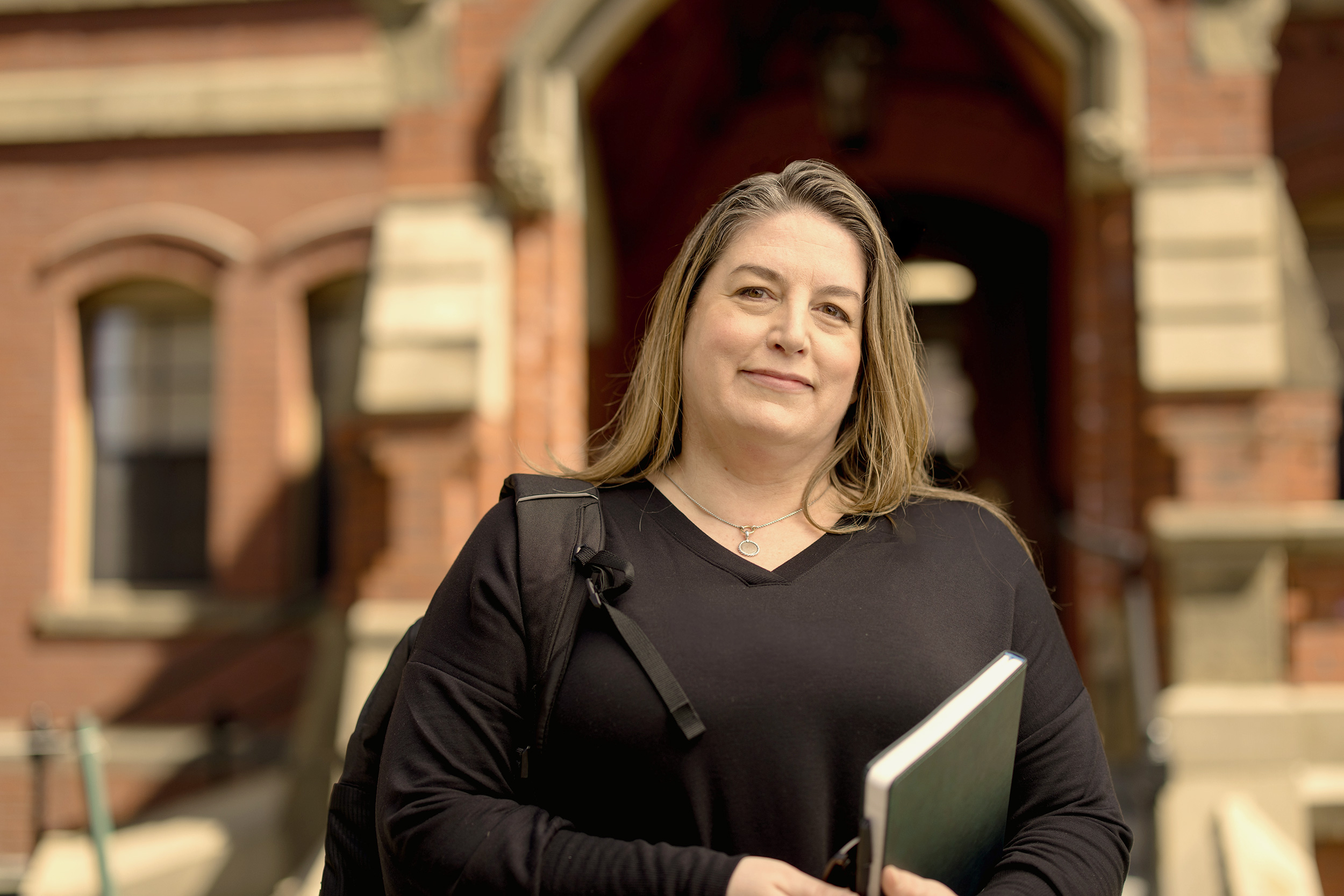
Why I Enrolled at Harvard Extension School
I’d been in project management for 25 years before I enrolled in Harvard Extension School’s Industrial-Organizational Psychology Master’s Degree Program. I was feeling burned out, tired, and unsure of what I wanted to do next. I knew I wanted to make a career change, but I didn’t know exactly what that would look like.
I made a giant spreadsheet of all the programs and certificates I was considering, including pros, cons, tuition, and start dates. Harvard Extension School stood out on that list for a few reasons. First, it has the Harvard name; I knew I would be challenged academically and that my degree would be taken seriously by potential employers. And second, Harvard Extension School has a unique degree admissions process. I could take a class at HES and see if I liked it and wanted to continue. Then, when I’d passed the three admissions courses for the program with a grade of B or above, I could apply to the program.
This distinctive structure gave me a chance to dip a toe in, to just take one class and go from there. I loved the class, “Stress, Coping, and Resilience”, so I decided to move forward and pursue a full degree.
The Harvard Extension School Experience
Harvard Extension School courses are rigorous. For me, it was just the right balance. I was challenged without feeling like I was drowning. And when I did have questions, support was readily available. Instructors, TAs, and other students were always there to answer a question, provide clarification, or lend a hand.
Before attending Harvard, I had already completed many certificate programs. While these had been helpful academically, they often felt like just checking a box. Harvard offered me something richer: I gained a network, a vision for a way forward, and people who supported me as I changed careers. At Harvard, it wasn’t just about what I was learning, but about how I could apply what I was learning to real-world situations.
My classmates were also incredibly inspiring. In the other educational opportunities I pursued, most people were just trying to get through the program. At HES, everyone really cares, they try hard, and they want to earn that A. But instead of being a competitive environment, it was motivating. My classmates’ excitement and enthusiasm elevated me — it was contagious.
How I Balanced Work and School
I worked full-time during the three years I pursued my master’s degree. When I shared my academic journey with my manager, I was given opportunities to work on projects that aligned with what I was studying.
I created an employee engagement program for my organization’s business unit, did a career planning workshop, and participated in a six-month rotation on the global talent & culture team supporting a culture transformation at my workplace.
Balancing work with school also requires careful time management. Based on my previous continuing education achievements, I was already experienced with structuring my time..
Fortunately, Harvard Extension is especially flexible; I attended about half of my classes asynchronously, watching lectures and completing work on weekends. About 25 percent of my classes met online at a set time, and the final 25 percent of my classes were in person since I live in the area and could easily commute.
How Harvard Extension School Impacted My Career
When I started the program, I was feeling a bit lost. I didn’t know what I wanted to do with my career, and I wasn’t feeling excited about my work. I went into HES thinking I might take a few courses or even earn a full degree, but I never suspected that I would completely change my career.
For a year, my role was employee engagement and organizational development and while I am currently between jobs, I also have a business conducting leadership coaching. I have decided to continue my education and am one year into a Psy.D. program studying leadership psychology and organizational development.
With my degree in industrial-organizational psychology, I’m invested in helping teams and leadership operate smoothly and making work a better place to be for everyone, from senior leaders to early career employees.
Now when I think about my career, I’m excited. My master’s degree journey brought the passion and fire back to my work, and I am thrilled to know both what I want to do with my life and how to get there.