What prompted you to enroll at Harvard Extension School?
I built a successful career in corporate finance at a Fortune 500 airline before significant health challenges changed my trajectory. During my recovery, I deepened my practice of trauma-sensitive meditation — a field that not only supported my healing but revealed a renewed sense of purpose.
Long curious about psychological science and human resilience, I recognized an opportunity to realign my career with what felt most meaningful.
How has your Harvard Extension School (HES) experience helped you throughout your career journey? How do you expect it to impact your next steps?
My HES experience has been nothing short of transformative. I enrolled in the ALM program to shift my career from corporate finance into psychological research, and HES offered exactly the structure and flexibility I needed to make that transition possible.
I was able to tailor my coursework to build a strong foundation in trauma studies, contemplative practices, and neuroscience — areas directly aligned with my emerging interests in traumatic stress and meditation research.
One of the most impactful parts of the program was the thesis track. Leading my own research project allowed me to gain hands-on experience while contributing meaningfully to a developing field. Through the HES Career Center, I secured a collaboration with the Center for Mindfulness and Compassion (CMC) at the Cambridge Health Alliance (CHA). That partnership was pivotal.
Fast forward to today: I now serve as the Operations Manager at CMC, blending my managerial expertise from my former career with my new research training.
HES didn’t just support my career change — it made it possible. It gave me the academic credibility, practical skills, and professional connections to fully step into this new field with purpose and confidence.
What did you learn about your own capabilities through the rigor of your coursework? Were there any moments in particular that pushed you to grow?
The thesis track pushed me in ways I had never experienced before. Leading an independent research project was completely new to me, and I often doubted my abilities. At times, the imposter syndrome was intense, and I questioned whether I truly belonged in this field or had chosen a path too ambitious for me.
The challenges didn’t stop there. During this demanding nine-month process, I also faced the loss of several loved ones. Navigating deep grief while meeting strict deadlines added a level of difficulty I could never have anticipated.
Despite it all, I never considered giving up. Instead, I learned that I am far more resilient than I realized.
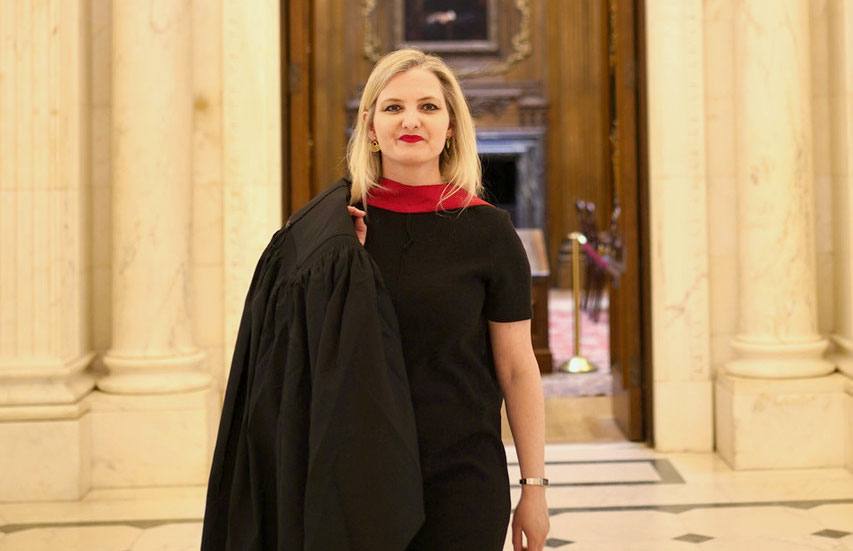
Crossing the graduation stage last May became a symbol of that perseverance. It proved to me that I can hold steady through hardship, grow through uncertainty, and complete work that once felt beyond my capabilities.
What does earning a Harvard degree mean to you?
Earning this degree fills me with pride. When I first began feeling better after my illness, I could have returned to the familiar path I had known for years. Instead, I took a risk and pursued something entirely new — something that felt meaningful but uncertain. Along the way, I questioned myself many times, wondering whether I had taken on more than I was capable of.
Now, standing on the other side of that journey, I’m grateful I found the strength to keep going. This degree represents resilience, reinvention, and trust in myself. I’m deeply thankful to the professors, advisors, peers, family members, and friends who supported me throughout this chapter.
One of the most meaningful moments was walking the graduation stage with my sister in attendance, by my side — an experience I will always cherish, especially now that she has sadly passed as well.
That memory makes this accomplishment even more special.