Ryan McCreedy
Talent and Culture Discipline Lead, Transformation, Slalom Consulting
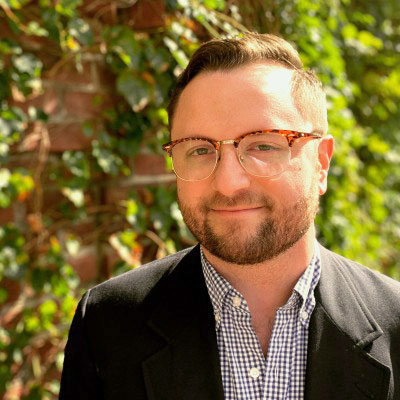
About Ryan McCreedy
Dr. Ryan T.W. McCreedy is a Director of Workforce Modernization & HR Transformation at Slalom Consulting, where he leads the Talent & Culture Discipline of practitioners and solutions. He is a scholar-practitioner of leadership and organizational psychology, primarily advising Fortune 500 clients on approaching transformations, culture change, and talent development with evidence-based practices. McCreedy has led transformations and strategic programs for dozens of clients across many industries, including many well-known financial services, life sciences, and consumer goods companies – from enterprise-wide restructurings to leadership development and 1:1 executive coaching. Additionally, advises research projects between Slalom’s HabLab and institutional partners, such as the Wharton Neuroscience initiative, conducting research on the neuroscience of teaming, AI, and the future of work. He completed his ALM in management at Harvard Extension School, where he now is an instructor for organizational psychology and management-related courses. He is also faculty at William James College and has had the honor of lecturing and presenting at University of Virginia Darden School of Business, William & Mary, George Mason University, Framingham State University, and The Wharton School. He actively conducts research on team effectiveness, leadership, hybrid work, employee experience, workplace well-being, AI-workforce implications, and applications of neuroscience at work. McCreedy completed his doctorate in leadership psychology at William James College, concentrating on the neuroscience of leadership and team dynamics.
What Dr. McCreedy Enjoys About Teaching at Harvard Extension School
My students are extraordinary. The people drawn to Harvard Extension School are working professionals who are not learning in the abstract. They bring the concepts into their lives, teams, organizations, and leadership the very next day. That immediacy creates a special kind of energy in the classroom. There is a hunger for personal development and transformation that is infectious, and it is not unusual to see students significantly shift themselves, their relationships, and even their organizations over the course of a semester. It is beautiful to witness.
What also makes the classroom so rich is the extraordinary diversity of the students. Students join from nearly every continent, across many time zones, bringing with them different cultures, industries, identities, life stages, and worldviews. Together, we challenge assumptions, test ideas, and sometimes have conversations that become incredibly moving. In those moments, you realize how beautifully unique we all are, and yet how remarkably similar the human experience can be across the world. That humanity brings the material to life in a way that is hard to replicate anywhere else. We all learn from each student, myself included.
Teaching at Harvard Extension School is especially meaningful because it marries the excellence and rigor of Harvard with the lived wisdom of adult learners from all walks of life. These are students who are genuinely driven to learn, grow, and apply what they are studying. As faculty, we are also encouraged to experiment with teaching styles and content in ways that create meaningful adult learning experiences. That freedom allows us to move beyond traditional lecture and create something more dialogic, applied, and transformational.
I teach from a scholar-practitioner lens, which means I try to bring both cutting-edge science and the realities of applying that science inside complex organizations. My work sits at the intersection of organizational psychology, business transformation, leadership, and neuroscience, and I love helping students see how these fields come together. I want students to leave the classroom realizing that they are influential in every system they are part of. With the right concepts, language, and practices, they can transform themselves and others in profoundly impactful ways.
Our classes are deeply dialogic and Socratic. We have discussions, debates, reflective exercises, case applications, and experiential learning that invite students to bring their whole selves into the room. Much of what I teach and consult on comes back to one core idea: make the implicit explicit. Surface assumptions. Name expectations. Challenge inherited mindsets. Create new ways of seeing that better serve the future of the person, team, or organization. Behavior is often governed by assumptions, and when we make those assumptions visible, people gain the ability to steer their reality in new and powerful ways.
As a graduate of Harvard Extension School, I know firsthand the challenge of being a working student. I know the discipline it takes to balance career, life, and rigorous study. I also know the profound impact this experience can have on a person’s career, confidence, and sense of self. That makes teaching here deeply personal for me. I see students not only learning content, but becoming different kinds of leaders, colleagues, thinkers, and human beings.
My deeper mission is to help more people live a life well lived. Teaching is one of the most meaningful ways I get to do that. I see students transform through the work, then go on to transform others, teams, organizations, and systems. In time, that process continues to cascade. It is a beautiful honor and privilege to plant those seeds of transformation.
Students never cease to amaze me. They remind me every class that this work matters. Transforming people, teams, and organizations is not just an academic exercise. It changes how people experience work, leadership, community, and themselves. That is why I teach. It is a privilege to help create more conscious, human, and flourishing systems in an era that can sometimes feel deeply inhuman.